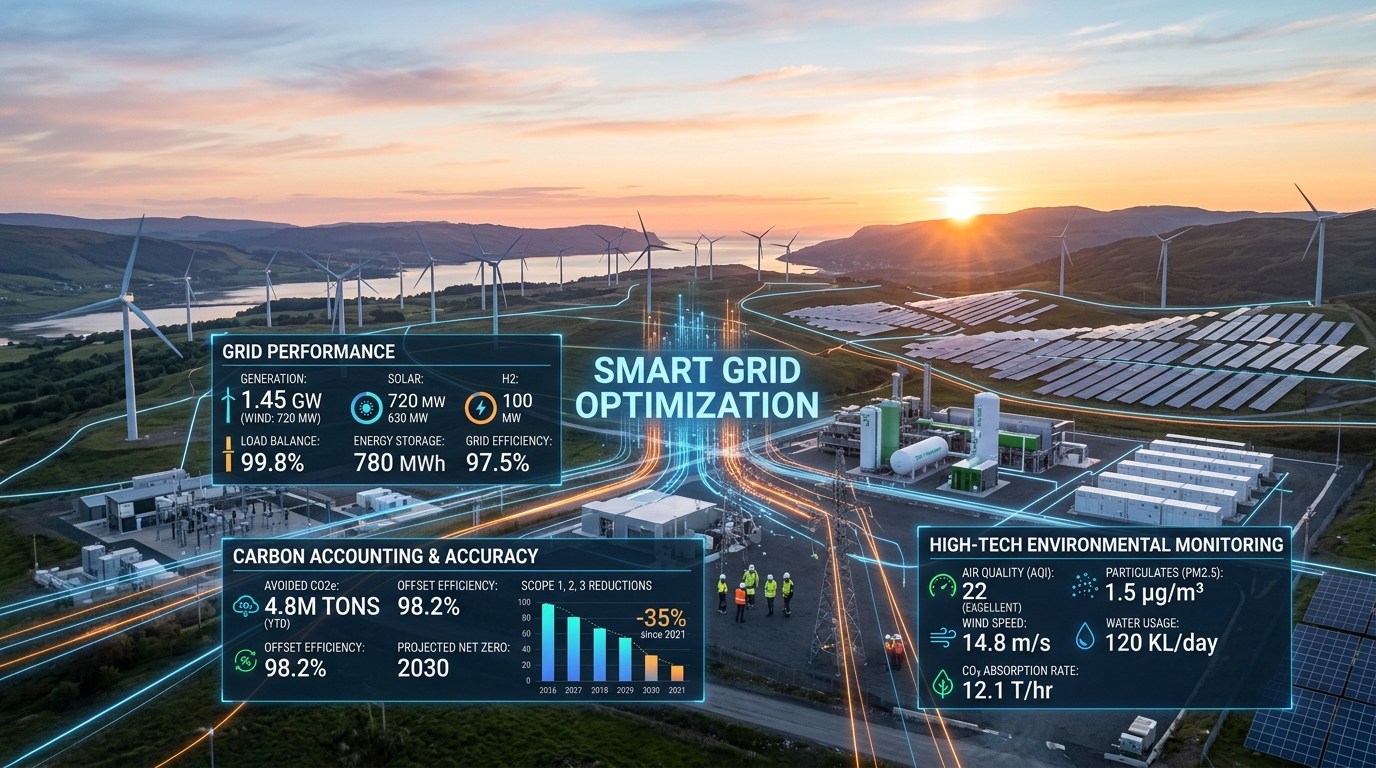
SUSTAINTERGRIS GLOBAL supports organizations in understanding and managing greenhouse gas emissions through structured GHG inventories, carbon footprint assessments, emissions data review, hotspot analysis and reduction planning.
Comprehensive carbon accounting across Scope 1, Scope 2, and relevant Scope 3 emissions.
Support the identification of organizational boundaries, emission sources, activity data, emission factors, calculation methods and reporting requirements for a structured GHG inventory.
Assess direct emissions from sources owned or controlled by the organization, where applicable to the agreed inventory boundary.
Assess indirect emissions associated with purchased or acquired electricity, steam, heat and cooling, using appropriate location-based and market-based accounting approaches.
Support assessment of relevant value-chain emission categories based on the organization's activities, data availability and reporting objectives.
Develop a structured assessment of an organization's greenhouse gas footprint and identify the main sources contributing to total emissions.
Identify major emission sources and operational areas where reduction efforts may provide the greatest potential impact.
Review activity data, assumptions, emission factors, calculation records and supporting evidence to improve consistency and traceability.
Translate inventory findings into practical emission reduction opportunities, priorities and implementation actions.
Support organizations in presenting GHG information clearly for internal management, sustainability reporting and applicable disclosure requirements.
Provide advisory support related to GHG quantification, reporting and verification-readiness based on relevant ISO 14064 standards, subject to agreed scope.
A rigorous sequence ensuring data integrity and verifiability.
Establish operational and organizational consolidation boundaries.
Map all fuel combustion, grid power, process, and value-chain sources.
Gather activity data, meter logs, utility invoices and purchase records.
Select recognized global/national GHG emission factors (IPCC, DEFRA, IEA).
Compute CO₂e quantities across Scope 1, Scope 2, and relevant Scope 3.
Perform data verification, anomaly checks, and audit trail validations.
Pinpoint operational areas representing the highest emission intensity.
Develop practical energy efficiency, fuel switching and abatement levers.
Produce management workbooks and reporting disclosures.
Our GHG accounting engagements are structured with reference to internationally recognized standards:
Corporate Standard, Scope 2 Guidance, and Scope 3 Value Chain Standard.
ISO 14064-1 (Quantification), ISO 14064-2 (Projects), and ISO 14064-3 (Verification guidelines).